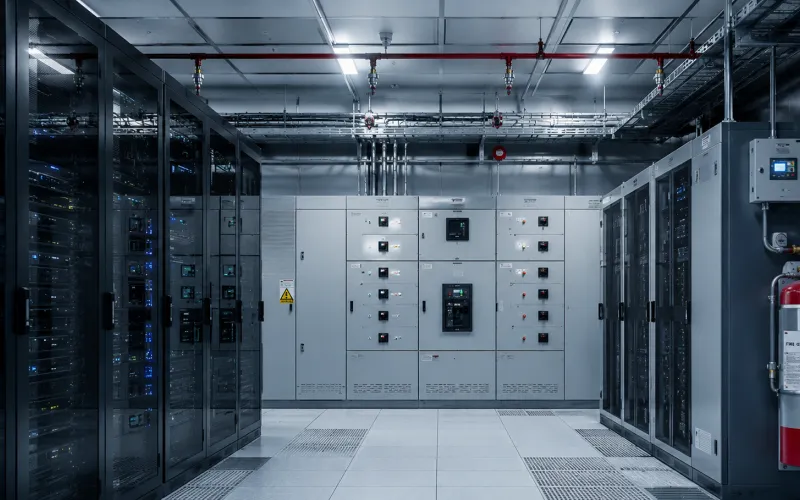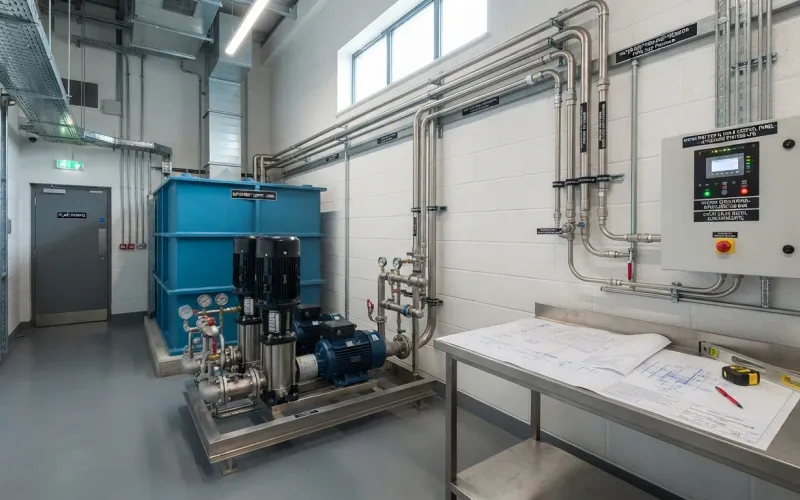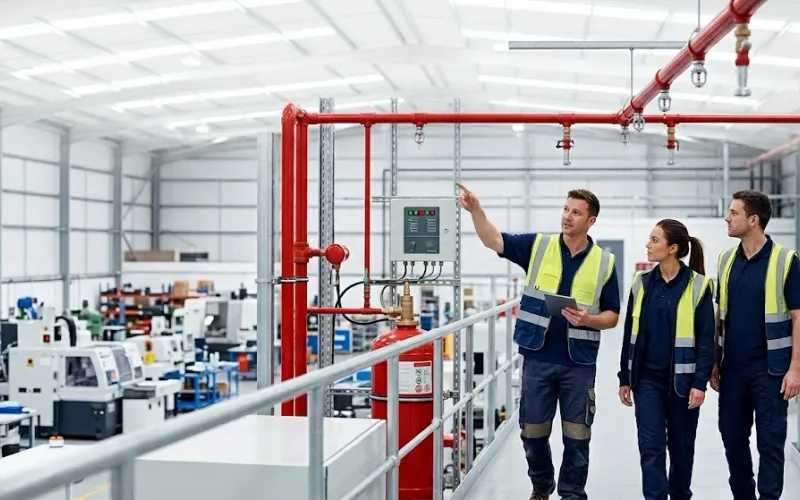
Gas suppression is used where discharging water would create an unacceptable second problem: damaged switchgear, lost server capacity, or a process that cannot be dried out and restarted on a normal programme. Clean agent and inert gas systems flood a defined enclosure and reduce the ability of the fire to continue, provided the room can hold the design concentration.
That last point is the one projects skip. A gas system is an enclosure project as much as a cylinder project. Doors, cable penetrations, HVAC shutdown, and integrity testing belong in the same scope as the nozzles.
Where gas is typically considered
Common UK applications include data centres and switchgear, control rooms, and other electrically dense spaces. It is not the automatic choice for every IT room. Occupancy, leakage, agent storage, and recharge logistics can all push the design towards water mist or a hybrid approach instead.
Our mist versus gas comparison sets out the questions that should drive the choice, rather than a preferred product.
Detection, occupancy, and the fire strategy
Gas release has to be coordinated with fire detection and alarms. Pre-discharge warnings, occupancy procedures, and abort logic are safety features, not optional software. The fire strategy should say who can be in the room, how they get out, and what happens if the system is isolated for maintenance.
We design, install, and commission the suppression and the controls together, then hand over a documentation pack that operators can actually use.
If you are scoping a server room, MCC, or control suite, send us the enclosure details and any existing integrity or detection information.