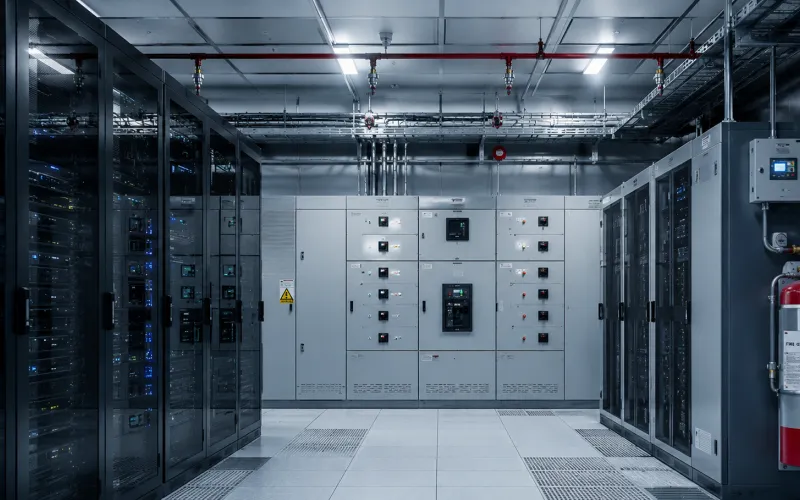
Data halls, server rooms, and switchgear rooms are not warehouses with more expensive contents. Electrical load, dense cabling, continuous occupation of adjacent spaces, and the cost of downtime all change the fire problem.
Water mist and gas suppression are both used in these environments. Neither is automatically superior. Gas needs an enclosure that will hold concentration. Mist needs a design that the operator can accept as a water-based discharge in a live IT space. Occupancy, leakage, and maintenance access often decide the argument.
How we compare the options
We start with the room, not the cylinder. Volume, openings, HVAC, who works in the space, and how the site would recover from a discharge are design inputs. Our article on water mist versus gas suppression for data centres sets out the same comparison we use with consultants.
Detection is specified with the suppression. Very early warning is useful only if the response path is real: who investigates, what is isolated, and when release is confirmed.
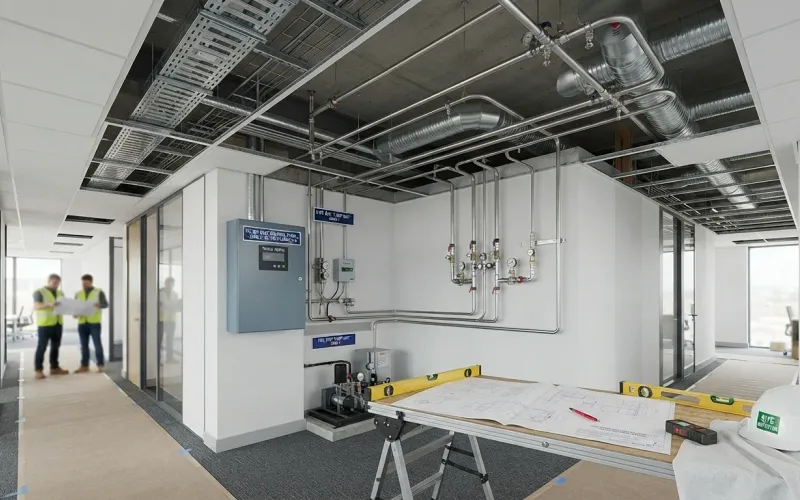
Plant rooms and mixed hazards
Many sites need more than one answer. A data hall, a generator room, and an HV switch-room can justify different systems on the same campus. We zone the hazard rather than forcing a single product through every door.
If you are writing an employer's requirement or reviewing a contractor proposal, send us the room data and any existing integrity or detection information.