Kitchens and process lines

Fire Suppression for Food Production and Commercial Kitchens

Fire protection for commercial kitchens and food production lines, covering cooking equipment, extract, and the wider building after a site-specific fire risk assessment.

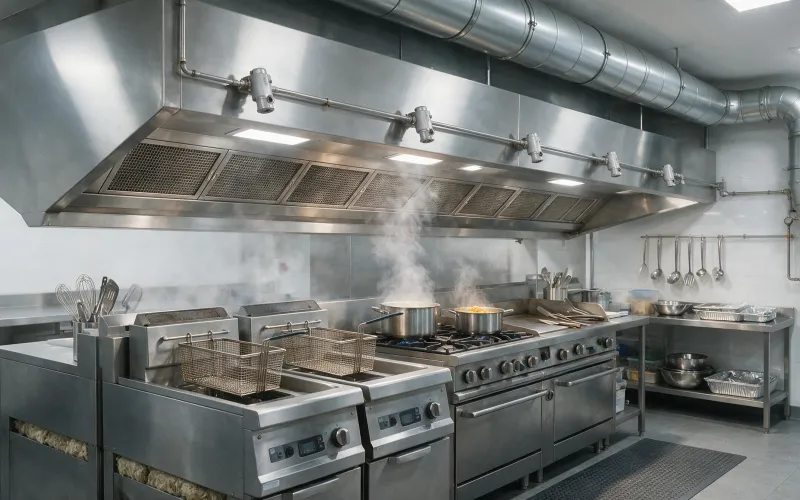
Commercial kitchens and food plants combine open heat, oils, grease-laden extract, and process equipment that may run continuously. A fire can start at a fryer and involve the hood, the duct, and the compartment above if those parts of the strategy were specified in isolation.

We design protection for the equipment and for the building. That may include local application, water mist, sprinklers, detection, or a combination. There is no single kitchen package that fits a restaurant line, a high-care factory, and a bakery the same way.

Equipment, extract, and the compartment

Hood and duct protection is necessary in many cooking environments, but it does not replace compartmentation, escape, or building-level suppression. Our article on fire suppression for commercial kitchens and food production lines walks through that split.

Hygiene and restart time also belong in the design conversation. Some sites cannot tolerate a wet-down of the whole hall. Others are more concerned with oil fires at a defined appliance. Those are different problems.

Standards, insurers, and next steps

Kitchen projects often arrive with insurer expectations already attached. We work from the fire risk assessment, the process description, and those comments, then produce a design that consultants can review.

If you are specifying a new line or replacing ageing hood protection, contact our engineers with drawings and a short description of the cooking or process hazard.
Key points

What to consider

  • Cooking equipment and hoods

    Local application for fryers, ovens, and extract is considered alongside, not instead of, the building-level fire strategy.

  • Hygiene and downtime

    System choice accounts for washdown, grease, and how quickly the line needs to restart after an incident or a discharge.

  • Water mist where it fits

    Mist can be a strong option for some kitchen and process compartments, but it is specified against the hazard rather than as a default.

  • Detection that survives the environment

    Heat, steam, and aerosols change detector choice. Kitchen detection is designed for the process, not copied from an office layout.

Common questions

FAQs

Answers to the questions specifiers and operators ask most often.

Keep reading

Related articles

Continue exploring fire safety guidance from our team.

Also in this section

More sectors

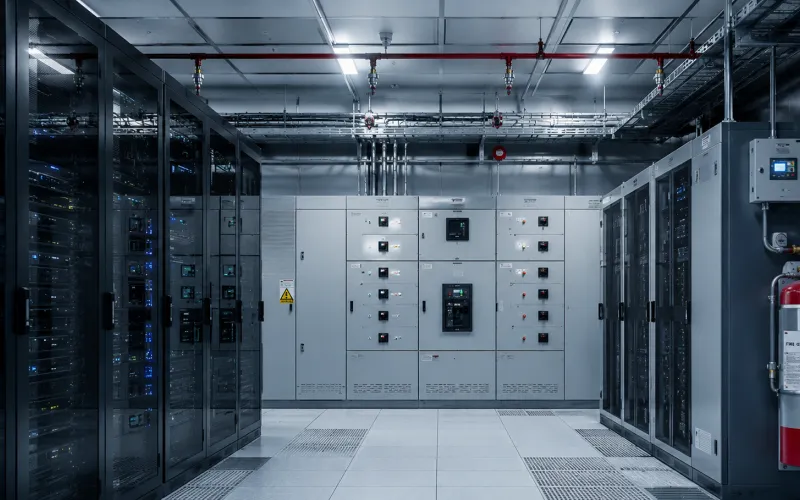
Fire suppression planning for a data centre and electrical switchgear room

Sectors

Data centres

Fire protection for data halls, server rooms, and switchgear, comparing water mist and gas against occupancy, room integrity, and the cost of downtime.

Learn more
Fire suppression planning for an underground commercial car park and EV charging hub

Sectors

EV car parks

Fire strategy for underground and covered car parks with EV charging — detection, suppression, ventilation, and the evidence insurers and reviewing authorities now expect.

Learn more
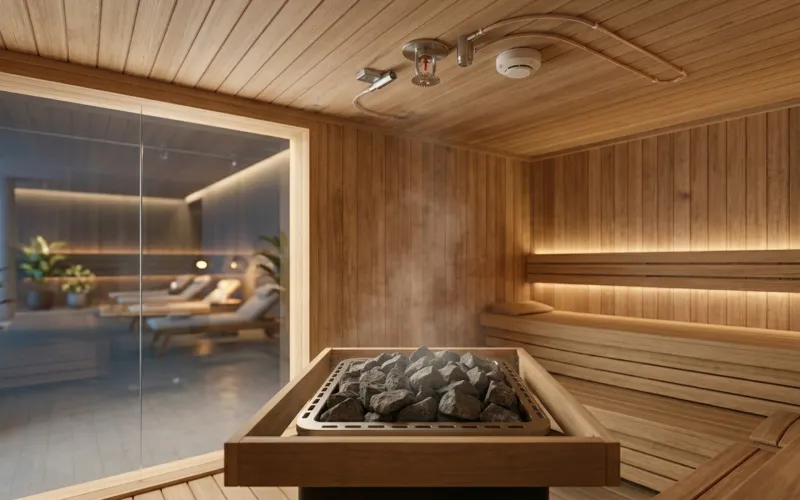
Commercial sauna fire suppression and heat detection system in a hotel spa facility

Sectors

Commercial saunas

Fire strategy for commercial saunas in hotels, gyms, and leisure buildings — heat, timber linings, detection, and suppression matched to a suitable fire risk assessment.

Learn more