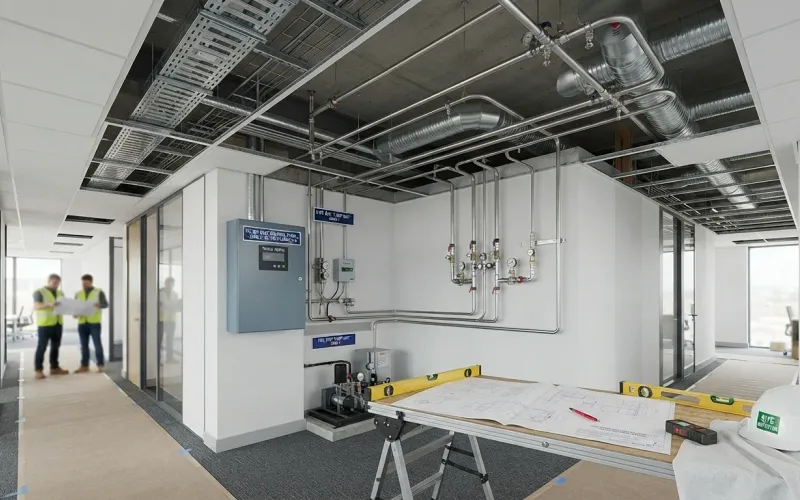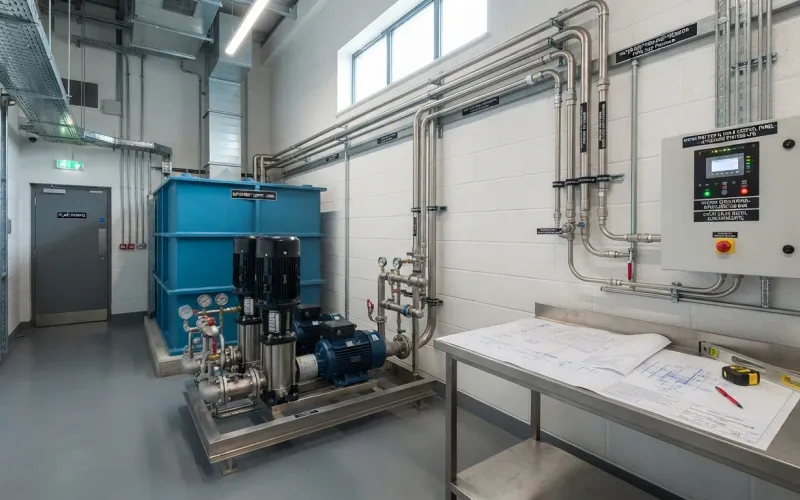
Water mist uses a fine spray to cool flames, displace oxygen locally, and limit fire growth with less water than a conventional sprinkler discharge. That can matter in food production, data halls, plant rooms, and other spaces where water damage, hygiene, or business continuity sit alongside life safety.
It is not a universal upgrade on sprinklers. Open, highly ventilated, or poorly defined volumes can be a poor fit without the right design evidence. The useful question is whether mist matches this hazard, this geometry, and this operating reality.
High-pressure and low-pressure systems
High-pressure systems typically produce very fine droplets and are often considered for sensitive or high-risk compartments. Low-pressure mist can be a better match where lower system pressures, simpler plant, or retrofit constraints drive the design. Open, highly ventilated, or poorly defined volumes can still be a poor fit without supporting evidence.
Both still need a designed water supply, suitable detection and control, and a commissioning plan. The choice is an engineering decision, not a catalogue preference.
Standards and evidence
UK specifiers will usually meet BS 8489 and BS EN 14972 early in a mist project. Those documents do not replace a fire risk assessment. They frame what evidence, occupancy, and system limitations should be on the table before anyone orders plant.
We produce design drawings, hydraulic calculations, and a documentation pack that consultants, insurers, and reviewing authorities can interrogate.
Retrofit, cost, and next steps
Existing buildings add constraints that a new-build specification will not see. Ceiling services, plant-room size, water storage, and downtime often decide whether a zoned mist system is practical. Our retrofit guide sets out the usual survey questions.
Buyers also ask about price before the hazard is defined. Water mist cost, lifespan, and ROI explains why headline comparisons fail, and which drivers actually move the number.
If you are comparing mist with sprinklers or gas on a live project, contact our engineers with drawings, the occupancy, and any insurer comments you already have.